
HPPAA INTERDISCIPLINARY ARTS PROJECT
Seeing Sound /
Hearing Color
Jazz, visual art, improvisation, listening, performance, and creative response come together in an adaptable HPPAA program for galleries, museums, colleges, universities, schools, festivals, and community spaces.
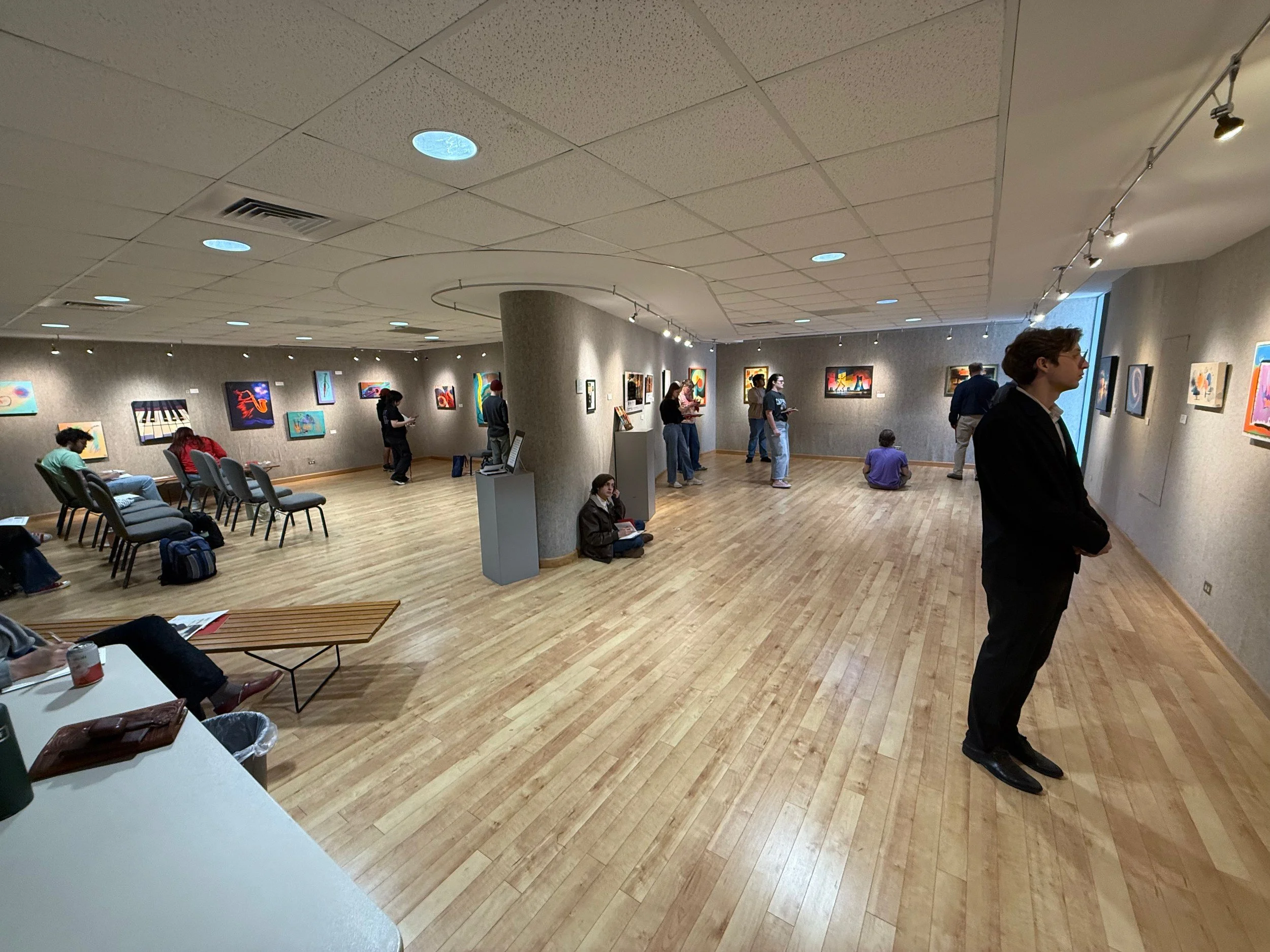
THE IDEA
A visual residue of listening and performance
Seeing Sound / Hearing Color begins with a question: what remains on the canvas after a musician listens deeply?
Created by jazz pianist, composer, improviser, and visual artist Hank Hehmsoth, the work responds to musical energy rather than illustrating a song literally.
Lines may behave like melody. Shapes can interrupt one another like an ensemble. Repetition, silence, density, color, gesture, and movement become visual counterparts to choices musicians make in real time.
There is no fixed code connecting one note to one color. Each work records an act of attention, memory, perception, and improvisation.
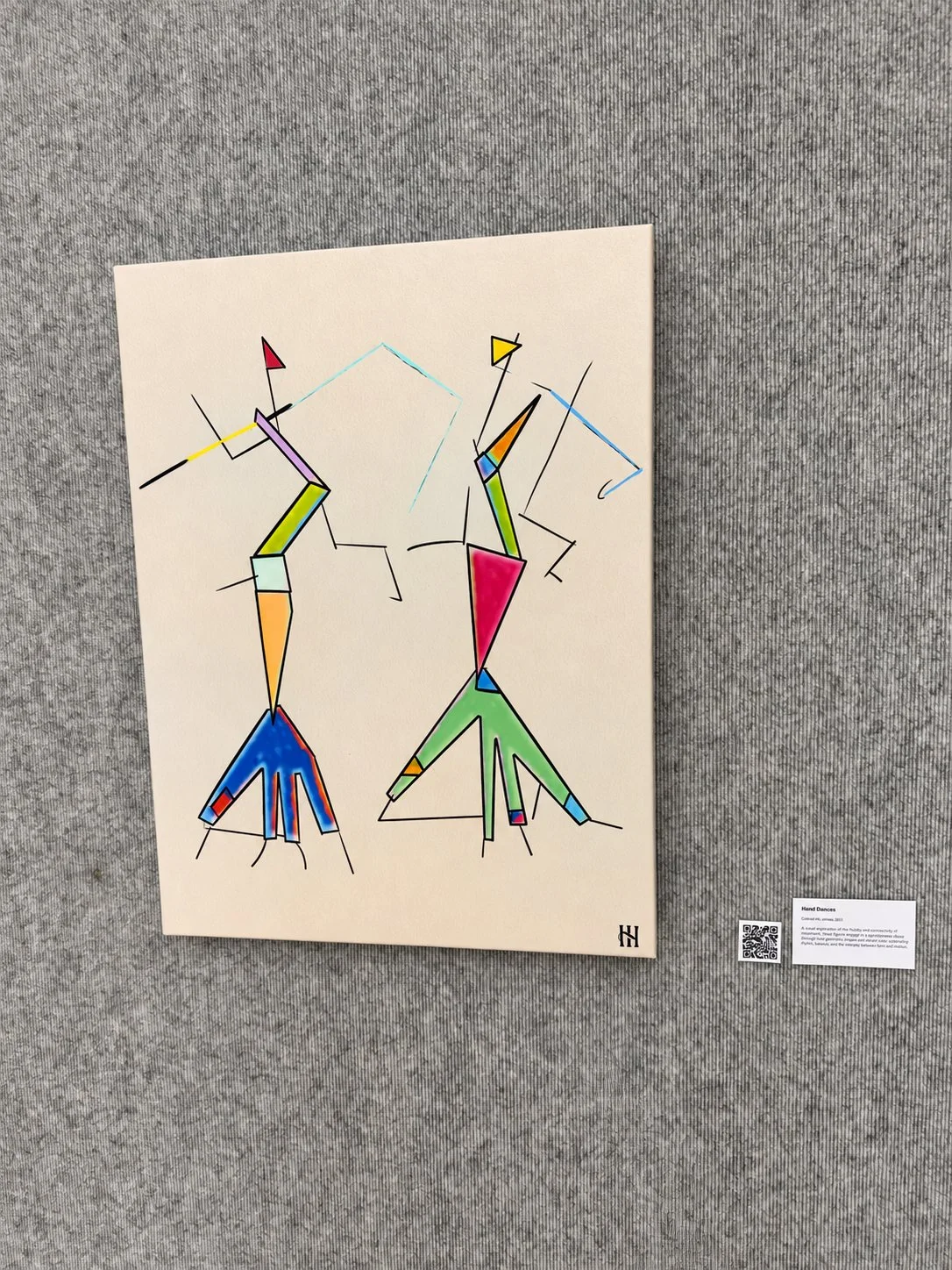
ONE PROJECT · FOUR WAYS TO EXPERIENCE IT
Exhibition, listening, performance, and participation
The project can stand alone as an exhibition or expand into a residency joining gallery installation, QR-linked listening, live Double Vision performance, artist talks, and participatory workshops.
Exhibition
Original abstract works create a visual environment shaped by musical rhythm, gesture, structure, memory, and improvisation.
Interactive Listening
Selected works carry QR-linked listening companions so visitors can hear the music while remaining physically present with the artwork.
Live Performance
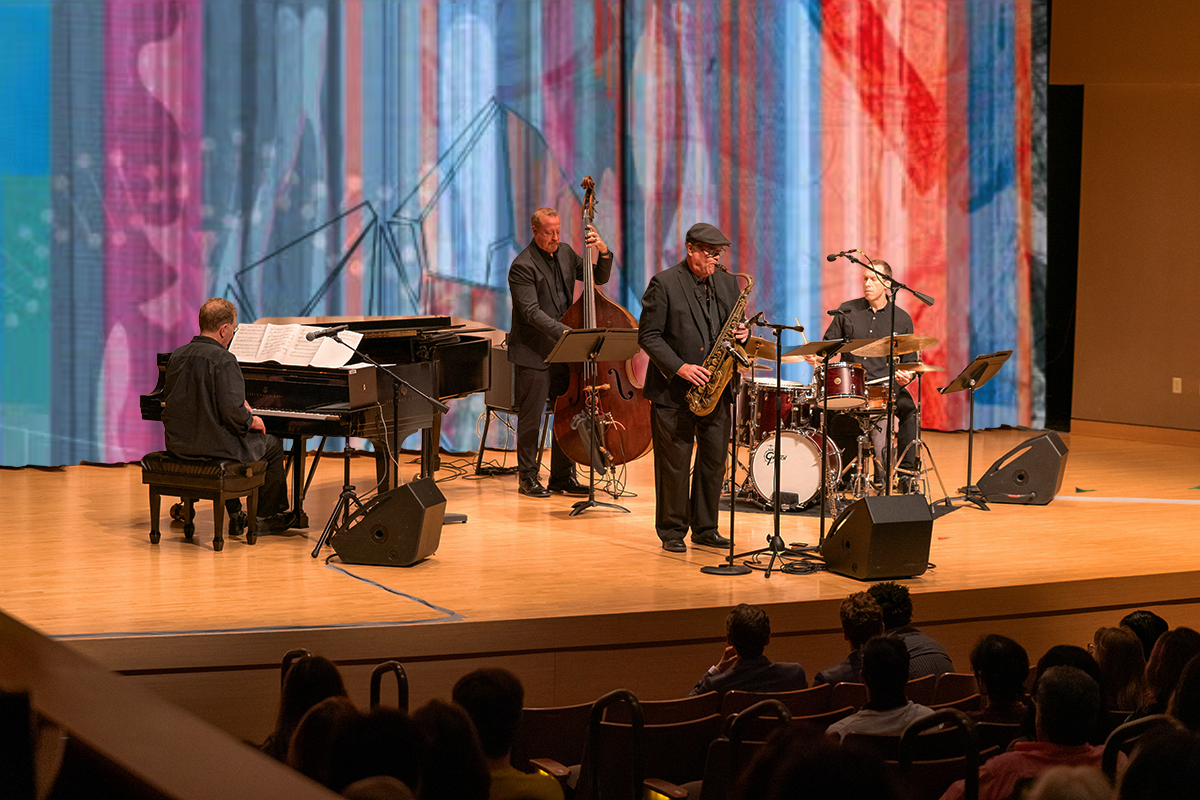
Double Vision Jazz Ensemble brings the project back to the stage, pairing original jazz and improvisation with projected visual artwork.
Workshops + Talks
Guided looking, deep listening, writing, drawing, haiku, conversation, and creative response invite participants into the process.
THE CENTRAL VISITOR EXPERIENCE
See. Scan. Listen. Respond.
The QR code is the bridge between visual art and music. Visitors encounter the artwork, scan the code beside it, hear a selected listening companion on their own device, and remain with the artwork while listening.
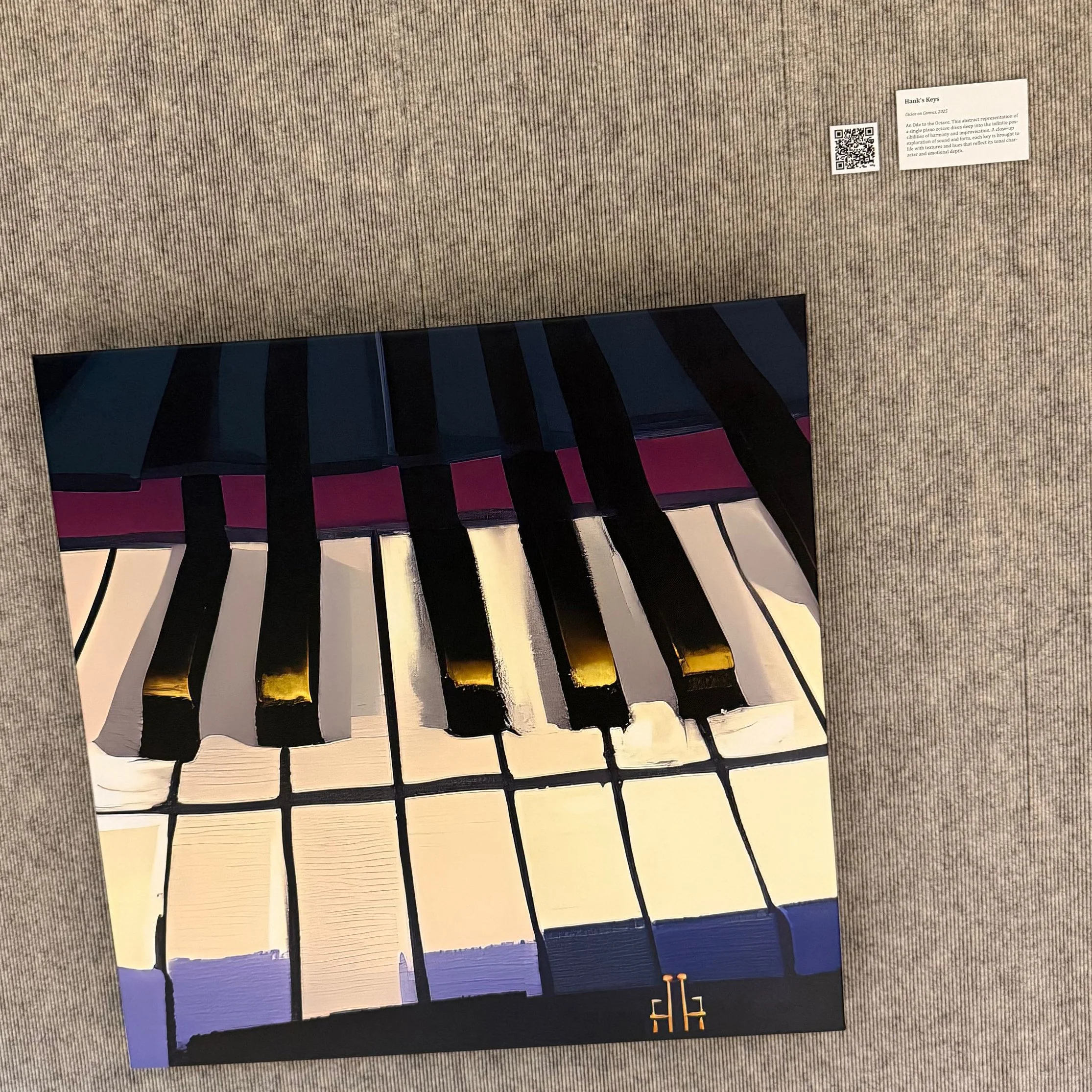
Encounter the artwork
Begin with the visual work itself—color, line, texture, gesture, space, and memory.
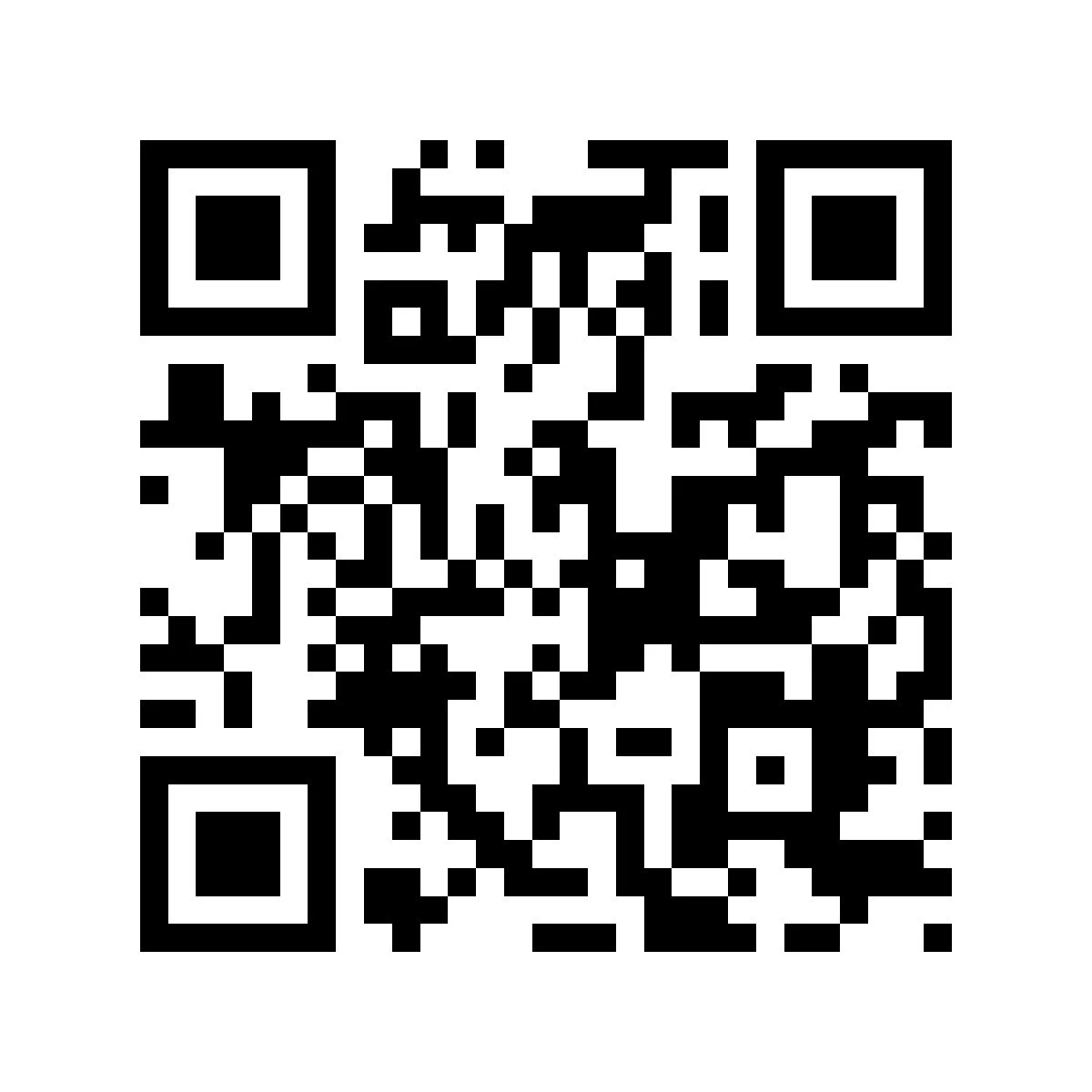
Open the listening companion
A QR code beside selected works connects the physical exhibition to a digital listening experience.
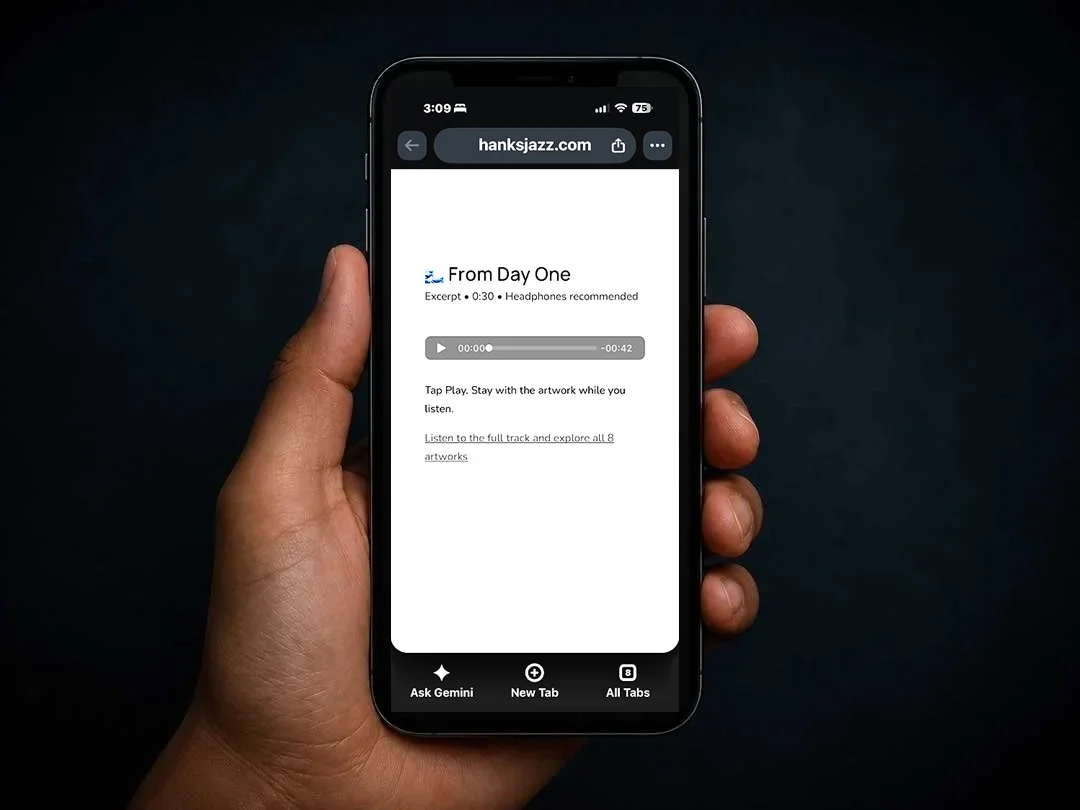
Stay with the artwork
Music enters the experience without replacing the visual work. Looking and listening begin to reshape one another.
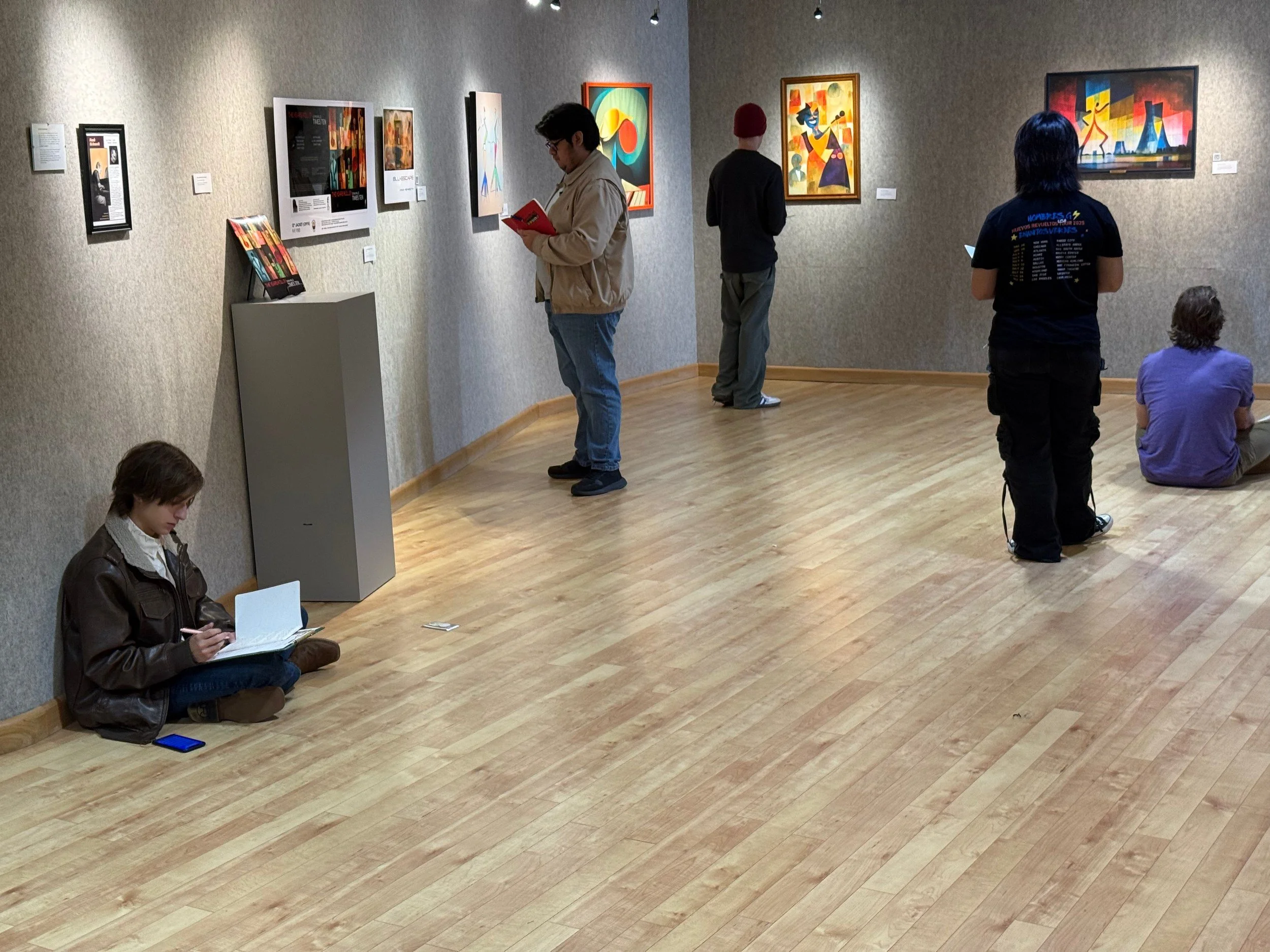
Make something of your own
Workshops extend the encounter through observation, writing, drawing, discussion, and haiku.
TRY THE LISTENING EXPERIENCE
Hank's Keys + “From Day One”
At Brazosport College, Hank's Keys was paired with “From Day One” from Exit as a selected listening companion.
The relationship invites visitors to remain with the image while hearing the music rather than treating the artwork as a literal illustration of the recording.
ART + MUSIC IN CONVERSATION
Selected listening relationships
The music is not a soundtrack imposed on the image. Each pairing creates another way to encounter the work: visual attention changes listening, and listening changes what the visitor notices in the artwork.
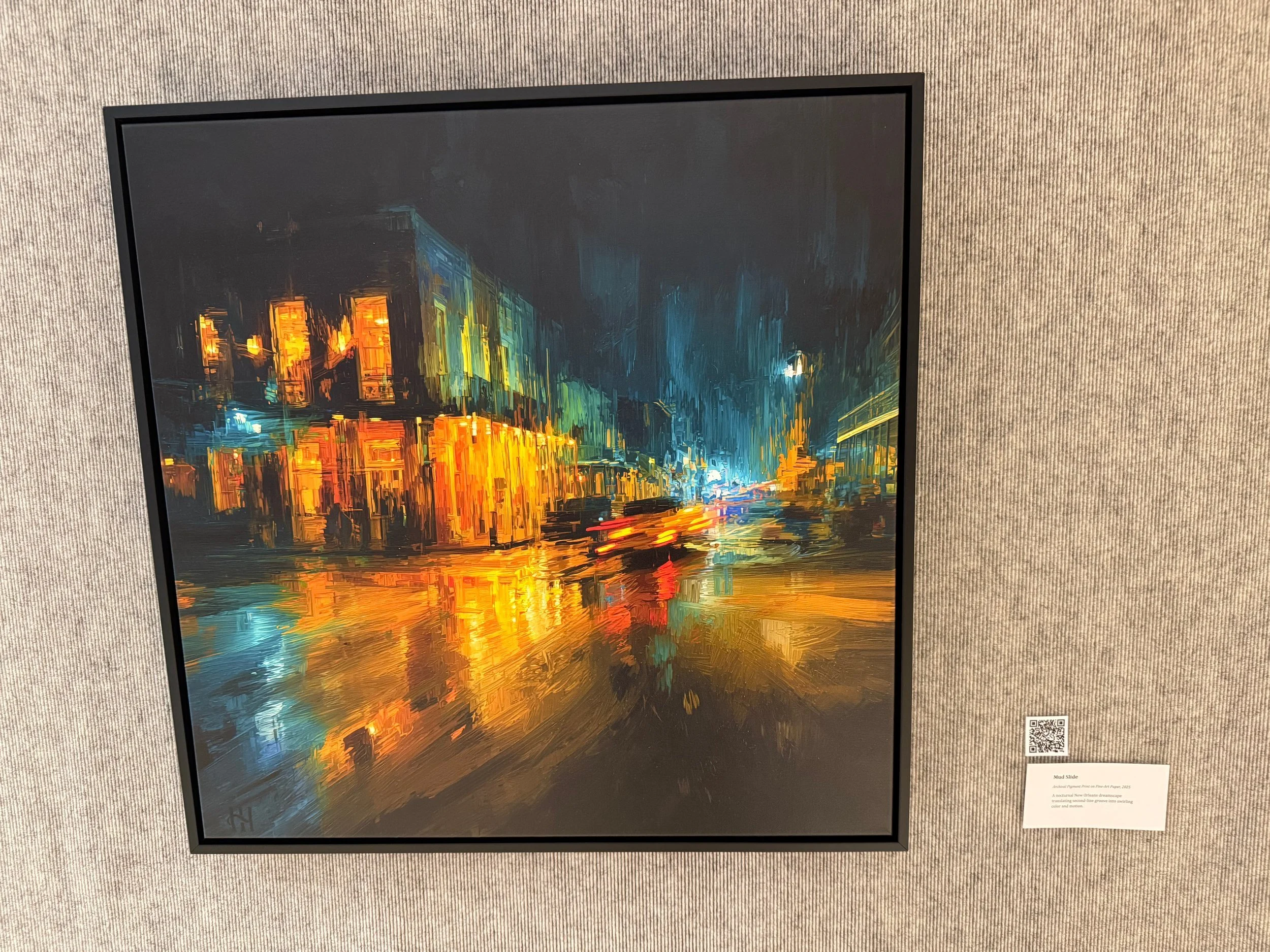
Mud Slide
The installed QR code connects the artwork with a live Double Vision performance of “Mud Slide.”
For presenters, the pairing demonstrates how the exhibition can connect directly with the ensemble's concert repertoire.
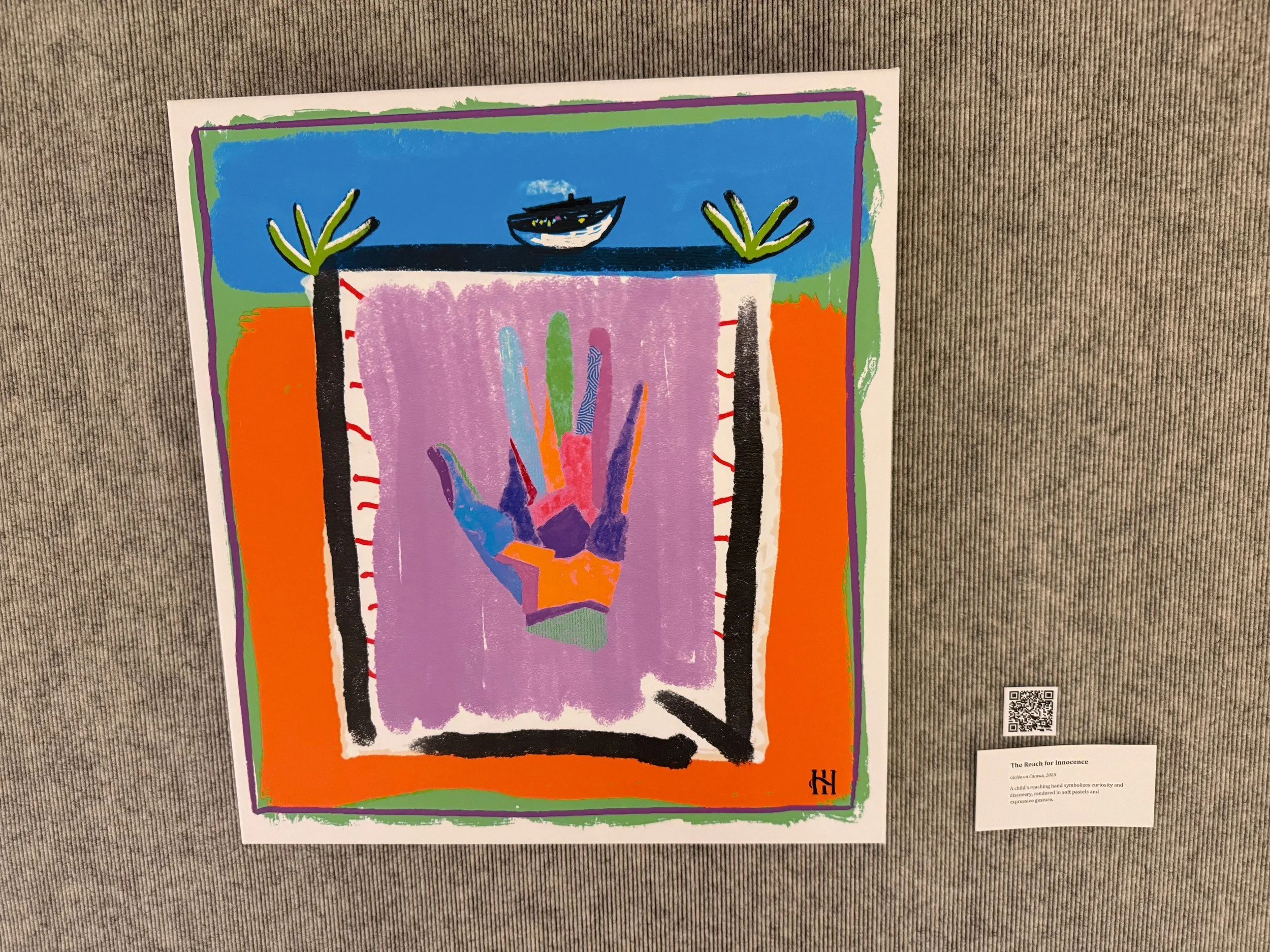
The Reach for Innocence
The pairing asks visitors to move between the artwork's visual gestures and the changing musical shapes of “Turquoise Rendezvous,” creating an individual rather than prescribed interpretation.
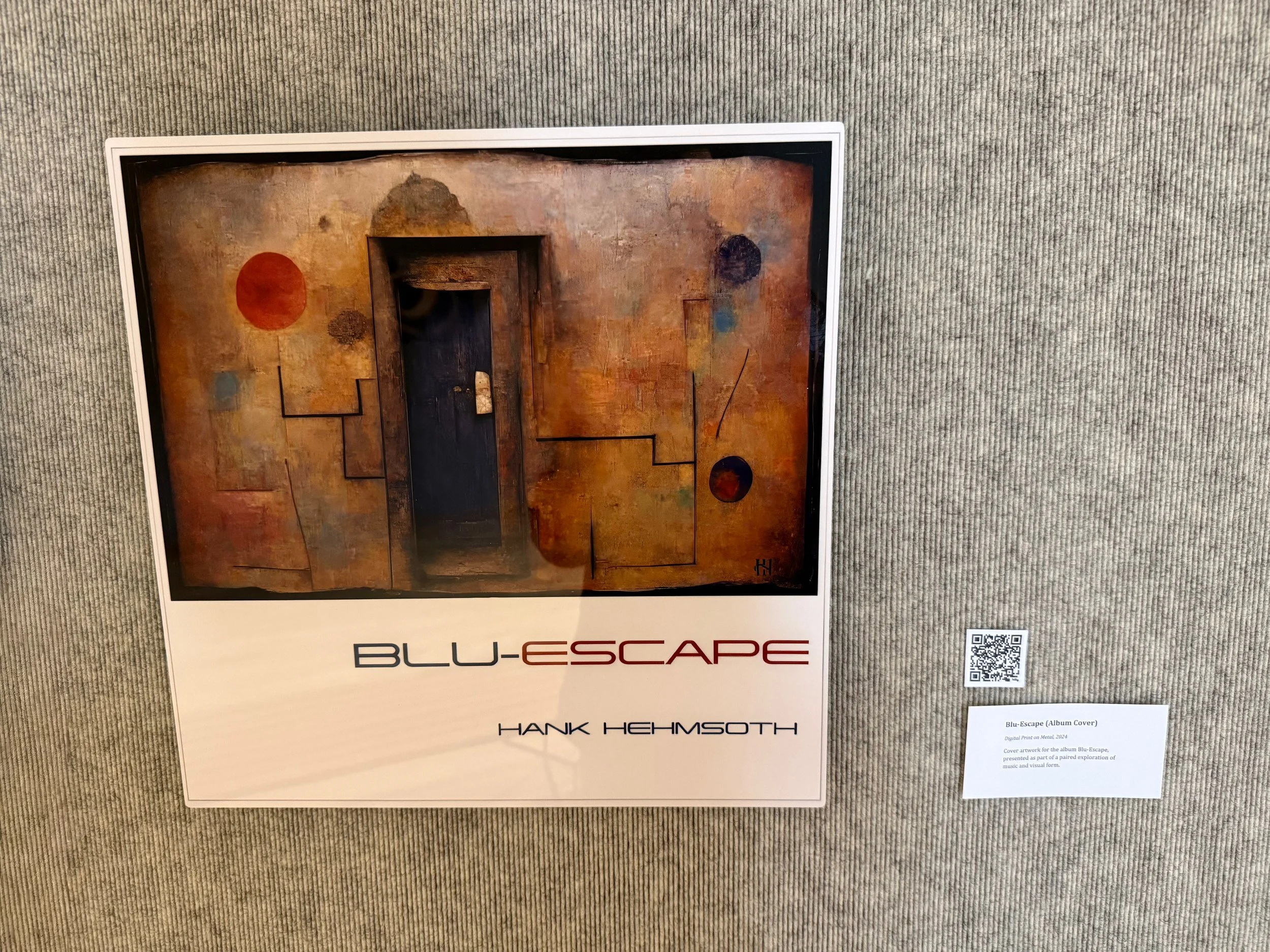
Blu-Escape
Here the visual and musical identities share the same title.
The work demonstrates another form the project can take: recorded music, visual design, exhibition presentation, and live ensemble repertoire existing inside the same interdisciplinary world.
INTERACTIVE CREATIVITY WORKSHOP
A workshop in deep listening and looking
The educational component turns the exhibition into a creative laboratory. Participants slow down, give one artwork or piece of music sustained attention, record what they notice, and transform perception into their own creative response.
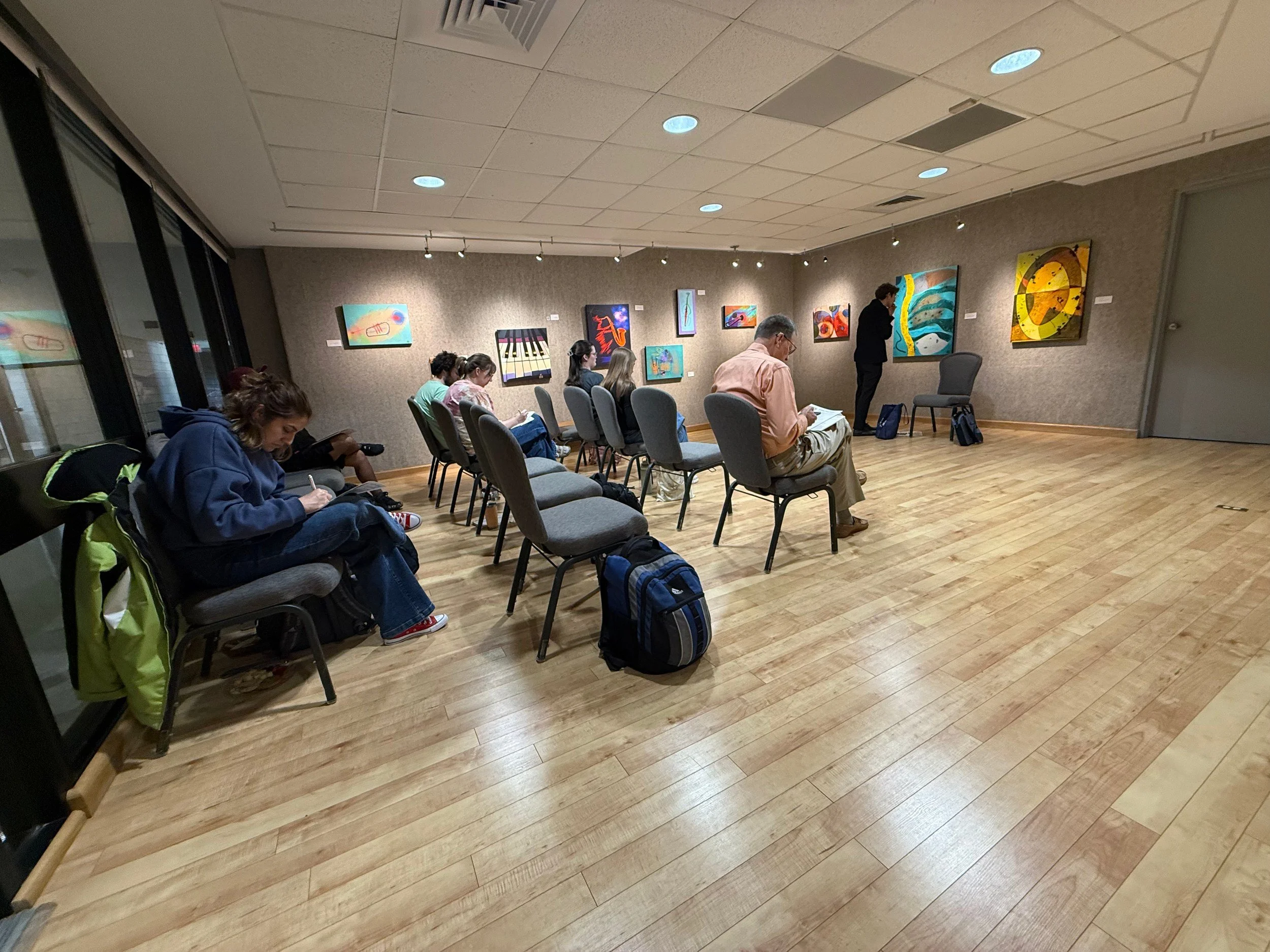
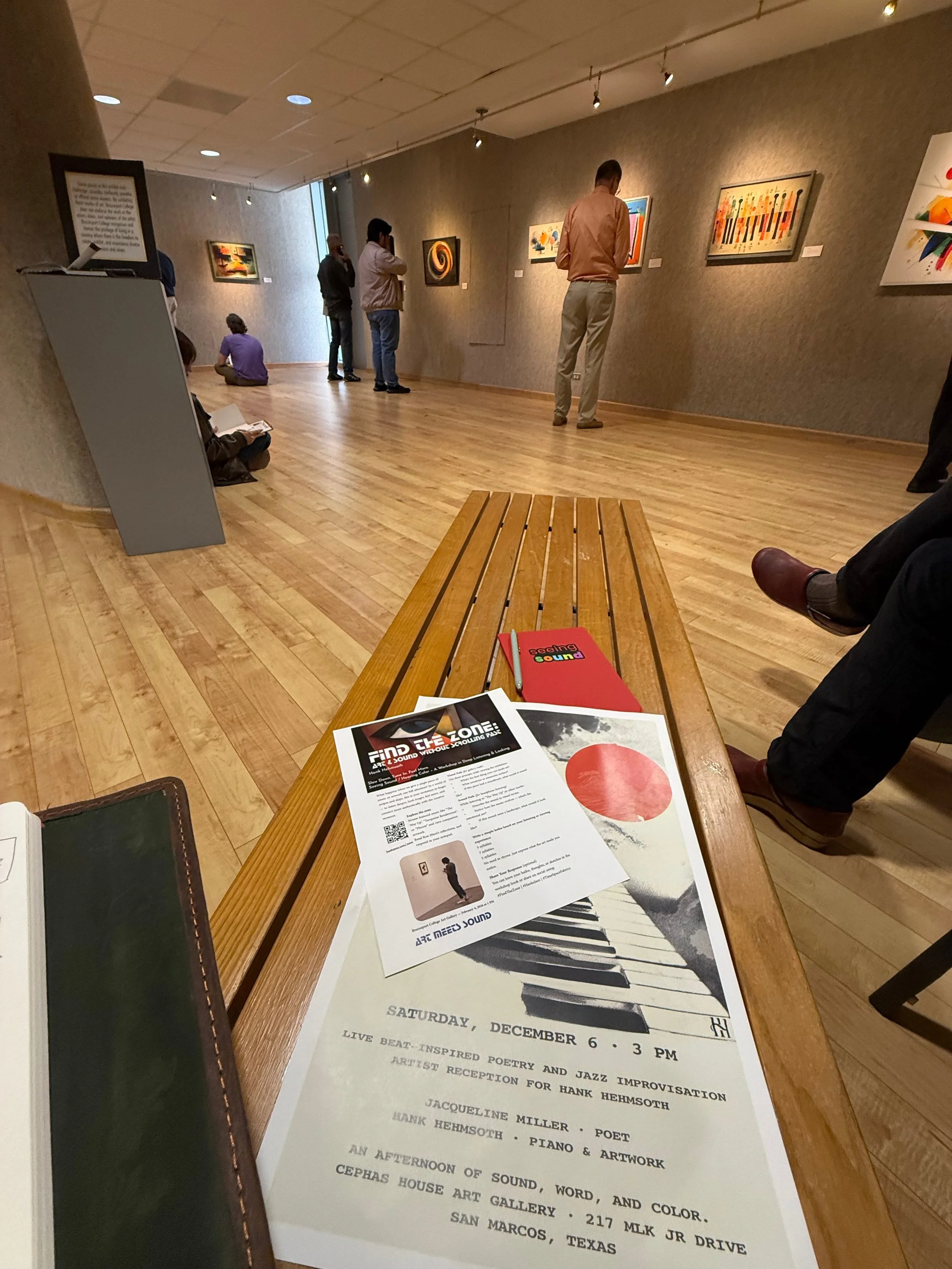
The Brazosport workshop used The Zone Guide: A Creative Response Workbook to lead participants through visual observation and focused listening.
Students viewed the installed artwork, listened privately through earbuds, wrote impressions and associations, and developed their observations into haiku and other creative responses.
Participants do not need previous training in jazz, visual art, or poetry. The workshop begins with perception: look longer, listen deeper, notice first, analyze later.
Observe closely. What catches the eye first? Notice color, line, texture, shape, space, and visual movement.
Hear closely. Notice melody, harmony, rhythm, texture, instrumentation, dynamics, and sonic space.
Record immediate impressions, memories, images, emotions, associations, and questions before over-analyzing them.
Transform the encounter into a haiku, drawing, title, story, reflection, or another concise creative response.
Optional discussion allows participants to hear different interpretations and respond to one another with care.
PROJECT IN PRACTICE
Brazosport interdisciplinary residency & exhibition · 2026
Brazosport College provides a complete working model for Seeing Sound / Hearing Color as a presenter-ready residency.
Twenty-five original works were installed in the Brazosport College Art Gallery during the 2026 exhibition.
The February residency connected the gallery installation with QR-linked listening, public interpretation, an artist talk, an interactive creativity workshop, and a live Double Vision Jazz Ensemble concert that returned the visual work to performance and improvisation.
Rather than treating the exhibition, concert, and educational activities as separate events, the residency allowed visitors and students to encounter the same creative ideas through image, sound, improvisation, conversation, and participation.
FOR PRESENTERS
From one exhibition to a flexible public program
Seeing Sound / Hearing Color can be scaled to the institution, venue, audience, and available residency period.
A presentation may begin with the artwork alone or combine exhibition, interactive listening, Double Vision performance, workshops, artist talks, and student or community engagement.
HPPAA works with presenters to shape the project around the institution rather than requiring a single fixed format.
TEXAS PRESENTER CONNECTION
Double Vision Jazz Ensemble
Double Vision Jazz Ensemble is an HPPAA touring ensemble listed on the Texas Commission on the Arts Touring Roster for 2026–2028, providing a direct presenter-facing performance connection to Seeing Sound / Hearing Color.
PRESENTER UPDATES
Receive occasional updates about HPPAA touring programs, residencies, interdisciplinary projects, educational programs, and presenter opportunities.
Get Presenter Updates →Gallery / Museum Exhibition
A curated installation of original visual works with interpretive material and optional QR-linked listening.
College / University Residency
Exhibition, classes, talks, workshops, live performance, and cross-disciplinary student engagement.
Interactive Listening Installation
Selected artwork and QR-linked music presented as a self-guided visual and sonic experience.
Double Vision Concert
Contemporary jazz and improvisation performed live with projected visual artwork.
Student / Community Workshop
Guided looking, listening, reflection, writing, visual response, and haiku using the Zone Guide process.
Artist Talk / Lecture-Demonstration
An accessible discussion of creativity, improvisation, perception, composition, and the relationship between sound and image.
PARTNERSHIPS + PRESENTATIONS
Bring Seeing Sound / Hearing Color to your community
HPPAA welcomes conversations with colleges, universities, galleries, museums, schools, festivals, performing arts presenters, and community organizations interested in interdisciplinary programming joining jazz, visual art, improvisation, listening, and creative participation.